Last Call for the Hype Train
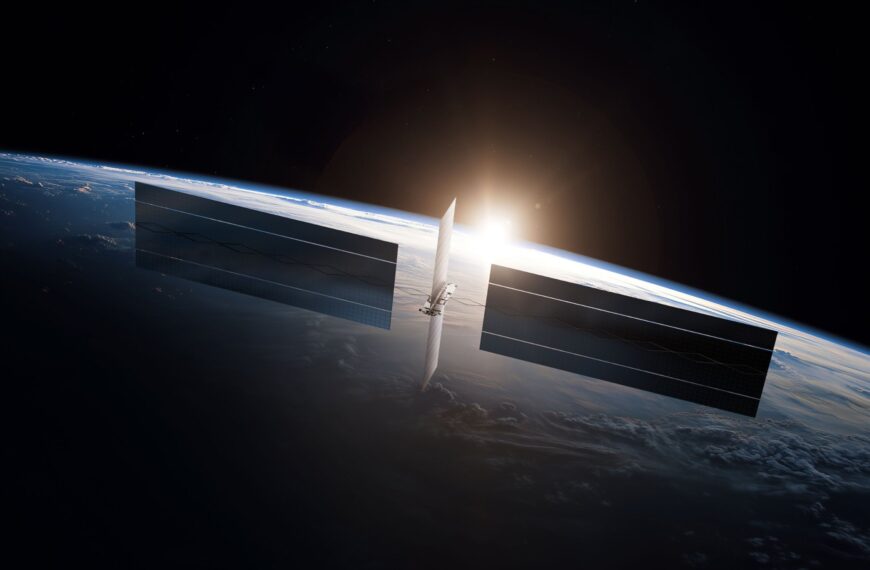
Elon Musk’s SpaceX is set to imminently go public at a valuation of $1.75 trillion, a number so unfathomably large that it basically defies logic.
Analysts have long argued that the math of the space launch-slash-orbital AI data center company simply isn’t adding up. According to recent estimates, SpaceX would have to increase sales by a whopping 50 percent every year for a decade to justify its valuation.
The more data we see about the blockbuster IPO, the harder it becomes to rationalize it. Investing in Musk’s rocket company is starting to feel less about trusting it to ever make money and more about signaling confidence in the billionaire’s vast ambitions to send humans to Mars or build out a one million satellites-strong AI data center in orbit. Others are likely looking to go along for the ride, hoping to get rich on the hype alone. That’s an inherently risky gambit, especially given the volatility of Musk’s other publicly traded company, Tesla.
As trial lawyer and online pundit Max Kennerly noted on social, SpaceX investors buying at the IPO’s $135 a share could be in for an extremely rocky ride. The company is going public at a valuation that’s roughly 95 times its trailing revenue. That’s compared to Google and Facebook, which launched at roughly seven and 20 times their valuation at the time of their IPO, respectively.
SpaceX’s initial public float, the portion of shares available to trade among retail investors, is extremely tiny, which has triggered concerns over major stock volatility. Put simply, with fewer available shares, even moderate buying or selling can trigger considerable price movements.
Retail investors could be left holding the bag after the initial surge in interest dies off, making SpaceX’s IPO resemble the launch of a dubious meme stock.
“For a mere $135/share, you get pro forma tangible book value of $7.85/share, an immediate 94 percent dilution,” Kennerly wrote, noting just how little actual value initial public shares will hold. “New investors are putting up 48 percent of all capital ever invested in SpaceX in exchange for 4.2 percent of the shares.”
Even SpaceX warned that the value of its shares could be diluted significantly in its Securities and Exchange Commission filing last month.
Shareholders will also have practically no say in the company’s functioning. Musk will keep over 80 percent of voting power thanks to a “dual class share scheme,” a controversial approach that gives company governance outsize control over where the company is headed.
Even just to keep its valuation at 30 times its $135 share value — a “generous” assumption — Kennerly found that SpaceX would need to generate around $60 billion of annual net income. That could require an unprecedented turnaround, considering the company lost $4.9 billion last year. Even Tesla made just $4 billion in profit last year, to put that number into perspective.
Meanwhile, SpaceX’s biggest revenue driver, its satellite-based internet service Starlink, “topped out and has to discount for new subscribers,” Kennerly noted.
Despite the many warning signs, those planning to bet against the company will likely tread carefully, as Reuters reports.
“It’s an extremely risky short play,” Falcon Wealth Planning CEO Gabriel Shahin told the agency, pointing out a huge amount of interest from bullish investors.
However, after the IPO, SpaceX will hit “unlock dates” when more shares become available, which could lead to more people shorting the company.
And that could come to the chagrin of Musk, who’s had a turbulent relationship with short sellers, going as far as to taunt them by selling naughty short-shorts through his carmaker.
More on the IPO: The Math on SpaceX’s IPO Is Virtually Impossible
The post The More Data We See About SpaceX’s IPO, the More We’re Wincing appeared first on Futurism.