
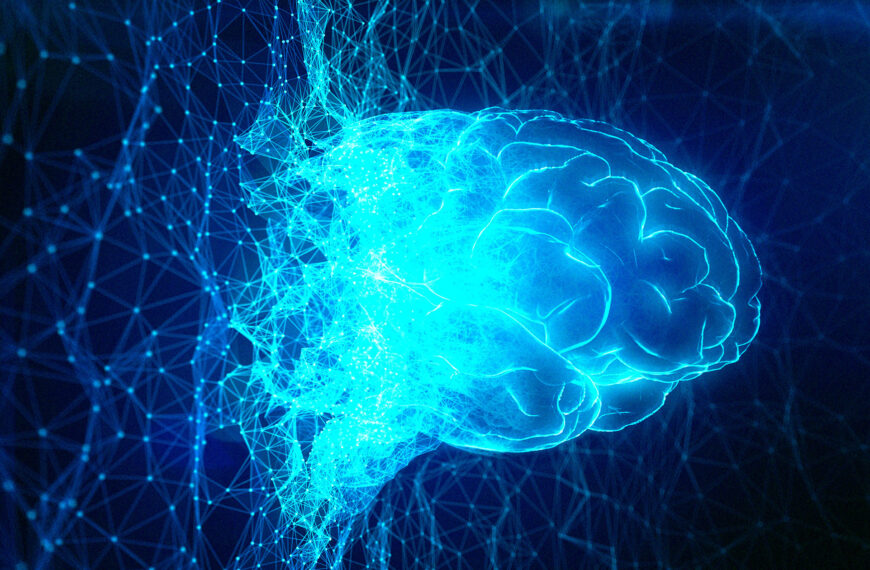
In 2024, researchers completed the first-ever map of the circuitry of a fruit fly’s brain.
Despite its diminutive size, the organ packs almost 500 feet of wiring and 54.5 million synapses into the size of a grain of sand — an astonishing feat of computational neurology research that allows scientists to better understand how signals travel throughout the brain.
And thanks to significant advances of some of the world’s most capable supercomputers, researchers at the Jülich Research Centre in Germany are now aiming their sights at a far more ambitious goal: a simulation at the scale of the entire human brain.
Previous attempts, dating back a decade, like the Human Brain Project, fell largely flat, despite considerable government funding. But as New Scientist reports, the Jülich researchers think they can push things forward. The idea is to bring together several models of smaller regions of the brain with a supercomputer to run simulations of billions of firing neurons.
The team, which is being led by Jülich neurophysics professor Markus Diesmann, will leverage the Joint Undertaking Pioneer for Innovative and Transformative Exascale Research (JUPITER) supercomputer for their simulation.
JUPITER is currently the fourth most powerful supercomputer in the world according to the TOP500 list, and features thousands of graphical processing units.
The team demonstrated last month that a “spiking neural network” could be scaled up and run on JUPITER, effectively matching the cerebral cortex’s 20 billion neurons and 100 trillion connections.
Once up and running, the simulation could be a major upgrade, Diesmann told New Scientist, compared to previous, much smaller simulations.
“We know now that large networks can do qualitatively different things than small ones,” he said. “It’s clear the large networks are different.”
At the end of the day, we’re still only scratching the surface of an organ that remains mysterious to scientists. Even simulations at the scale of a human brain will only teach us so much about how it functions.
“We can’t actually build brains,” University of Sussex mathematical physics professor Thomas Nowotny told New Scientist. “Even if we can make simulations of the size of a brain, we can’t make simulations of the brain.”
More on brain simulations: People Are Horrified by Lab-Grown Human Brains
The post Scientists Preparing to Simulate Human Brain on Supercomputer appeared first on Futurism.