
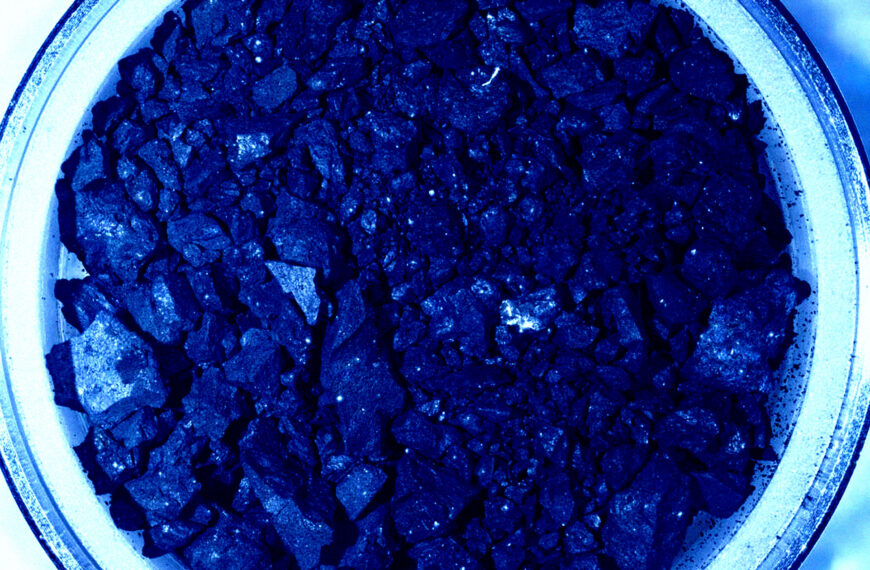
In June 2019, a Japanese spacecraft called Hayabusa2 touched down on Ryugu, a 3,000-foot asteroid some 185 million miles from Earth.
It then proceeded to fire a metal bullet at the surface, dislodging enough material to scoop up with a special “sampling horn” to take back home to our planet.
Scientists have been poring over the extremely rare samples ever since to study the near-Earth asteroid with the hope of learning about how the building blocks of planets evolved over time — and just maybe how life on our planet first came to be.
The latest findings, published in the journal Nature Astronomy by a team of researchers in Japan, tell a fascinating story: Ryugu appears to contain all the necessary ingredients to make the DNA and RNA underpinning life on Earth.
The conclusion supports the theory that errant space rocks like Ryugu could have brought life to Earth billions of years ago.
“Their detection in Ryugu strongly supports their ubiquity in the solar system,” coauthor and Hokkaido University post-doctoral researcher Yasuhiro Oba told New Scientist.
Oba and his colleagues examined surface and subsurface samples brought back by Hayabusa2, coming across all five primary nucleobases, which are compounds that make up DNA and RNA when combined with sugars and phosphoric acid.
The news comes after NASA scientists revealed last year that dust samples from a separate asteroid, dubbed Bennu, collected by its OSIRIS-Rex spacecraft in October 2020, similarly contained the building blocks of life. The rich array of minerals and organic compounds in the spacecraft’s samples featured amino acids and the requisite nucleobases.
While the latest findings suggest Ryugu’s samples contain all nucleobases — including uracil, adenine, guanine, cytosine and thymine — required to build life, this “does not mean that life existed on Ryugu,” lead author and Japan Agency for Marine-Earth Science and Technology post-doctoral researcher Toshiki Koga told Agence France-Presse.
“Instead, their presence indicates that primitive asteroids could produce and preserve molecules that are important for the chemistry related to the origin of life,” he added.
While the results “do not suggest that the origin of life took place in space,” University of Alcala astrobiologist Cesar Menor Salvan, who was not involved in the study, told AFP that we now have a “very clear idea of which organic materials can form under prebiotic conditions anywhere in the universe.”
“It is very likely that more complex organic molecules like nucleic acids are formed on asteroids,” Oba told New Scientist, suggesting the role of asteroids could be even more important in our quest to understand how life began on Earth.
More on Ryugu: Scientists Find Evidence of Flowing Water on Giant Asteroid
The post Samples From Distant Asteroid Contain All DNA and RNA Building Blocks appeared first on Futurism.