Last month, the United Nations warned that this year’s El Niño, a naturally occurring climate pattern characterized by unusually warm ocean surface temperatures throughout the Pacific, would be particularly extreme.
“The world must treat it as the urgent climate warning it is,” the World Metereological Organization cautioned at the time. “El Niño conditions will pour fuel on the fire of a warming world.”
Indeed, the National Oceanic and Atmospheric Administration (NOAA) confirmed that there was a rising chance of a “very strong” El Niño, triggering drastic temperature swings and more frequent extreme weather events, from severe storms to major flooding. Meanwhile, human-driven climate change will only amplify these effects, making this summer particularly precarious.
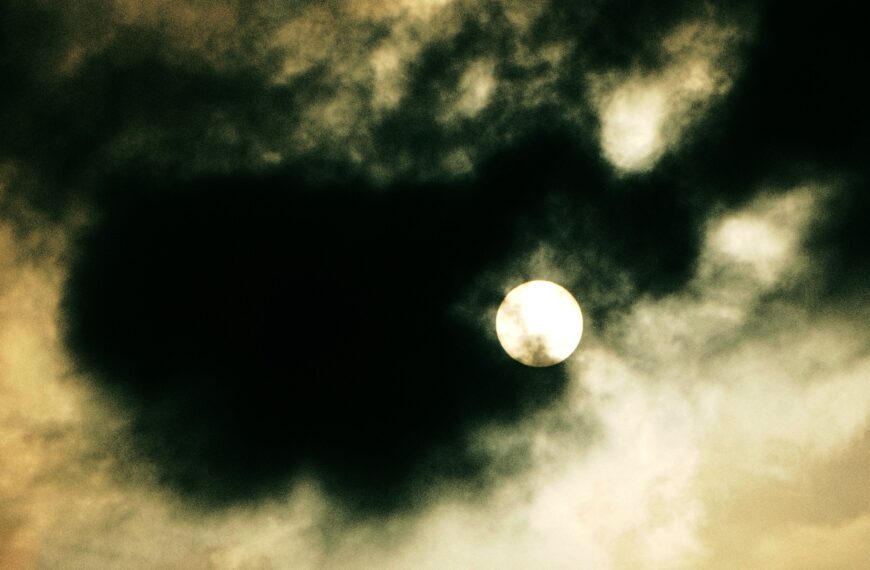
But scientists say we’re not entirely helpless. According to a new study published in the journal Science Advances on Wednesday by researchers at UC San Diego, weather-altering interventions — including the radical proposition of dimming the Sun — could tamp down El Niño’s impacts.
The concept, broadly referred to as geoengineering, is deceptively simple. By injecting special particles into the Earth’s stratosphere, more of the Sun’s rays are reflected back into space, allowing the surface below to cool. It’s the same basic principle as a volcanic eruption injecting chemicals that cause global temperatures to drop, like with the Krakatau blast in 1883.
In their study, the researchers argued that “marine cloud brightening,” a solar geongeering concept that involves using aerosols to make clouds over the sea brighter and therefore reflect more sunlight, could “theoretically mitigate extremes” of seasonal phenomena, including El Niño.
“As long-term anthropogenic warming and short-term natural variability often compound to produce extreme weather events, our findings suggest it may be worth considering interventions which target natural variability, rather than the forced response to greenhouse gases,” the paper reads. “Such an approach could result in similar physical risk reduction with shorter duration interventions that carry less sociotechnical risk than a sustained deployment.”
Geoengineering has proven highly controversial in the past, creating a major rift among climate scientists and public outcry that’s halted experiments before they even started. Critics argue it’s a distraction from more important solutions, like reducing the burning of fossil fuels, and that we still don’t have a full picture of possible knock-on environmental effects. There are also major questions of governance — who gets to decide where these aerosols are released and when?
While coauthor and UC San Diego climate scientist Kate Ricke would normally fall into this camp of scientists urging for more research to understand the risks, she and her colleagues argued that extreme but temporary events like El Niños could serve as the perfect testing ground for strategic marine cloud brightening.
“One of the biggest social concerns around geoengineering is the fact that if we use it to reduce long-term climate risks, we have to deploy it continuously for an indefinite period of time,” said coauthor and University of Chicago postdoctoral researcher Jessica Wan, who was a graduate student at Ricke’s lab, in a statement. “If we could target natural variability, we could get some of the benefits of geoengineering without having to employ it indefinitely.”
For their latest paper, Ricke and her team built on a 2023 study which found that bushfire smoke over the Pacific Ocean had emitted major amounts of aerosols, which brightened clouds and caused more solar radiation to reflect back into space.
The team simulated what would happen if cloud brightening chemicals would’ve been deployed intentionally during previous El Niños and found that it would indeed weaken the weather pattern’s effects.
Other experts were left unconvinced.
“These models are imperfect, and there’s the possibility that you’ll create an unpredicted problem that is worse than the problem you’re trying to solve,” Texas A&M University professor of atmospheric science Andrew Dessler, who was not involved in the research, told Wired. “I think this is a really interesting paper, and I learned a few things reading it, but I certainly would not say that this is a great idea and we should implement it.”
As such, considering the many unknowns, there still aren’t any concrete plans to test the idea out in the real world. But the authors argue it’s worth a shot nonetheless.
“It’s a different way of thinking about geoengineering,” said Ricke in the statement. “We need to understand a lot more, but if there is a way to use this in addition to the risk-reduction tools to mitigate El Niños, why wouldn’t we consider it?”
More on geoengineering: Research Paper Warns That There’s a Massive Experiment at Work to Geoengineer the Earth’s Climate
The post Scientists Propose Dimming Sun to Combat El Niño appeared first on Futurism.