
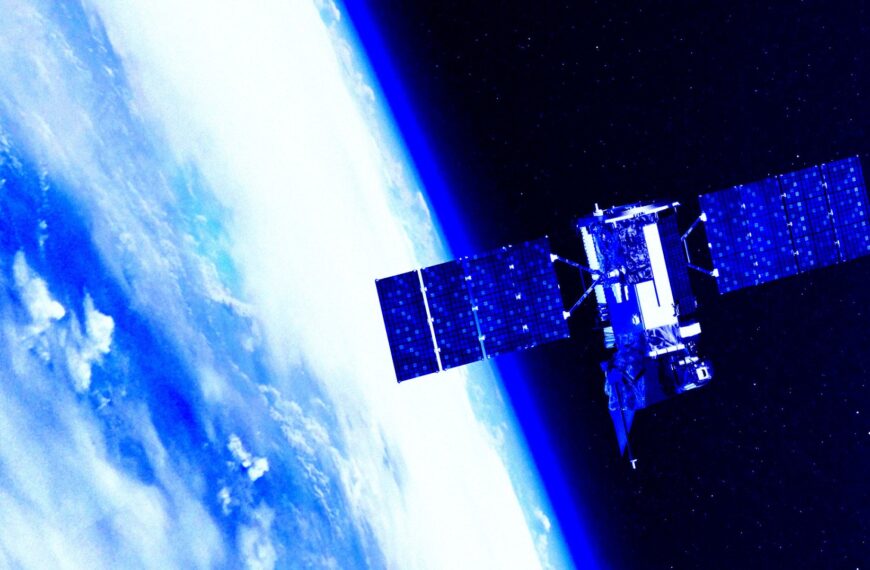
It’s not just Elon Musk’s SpaceX and Jeff Bezos’ Blue Origin looking to send data centers into orbit. Google is also looking to get in on the fun — and is now gearing up to launch a fridge-sized satellite with the equivalent computing power of a single server as soon as next week.
As the New York Times reports, the prototype satellite is part of the tech giant’s Project Suncatcher. As its name suggests, the goal is to take advantage of unfiltered sunlight around the clock to power AI data centers in our planet’s orbit — instead of crushing the electrical grid, spewing copious amounts of pollution, and draining fresh water supplies back on the ground.
Companies like Google still have a long way to go to find out whether it actually works, let alone whether it’s financially feasible. Obstacles include errant pieces of space junk that could turn enormous orbital data centers into Swiss cheese, copious amounts of space radiation wreaking havoc on the onboard electronics — which also have to be kept cool somehow — and providing a solid enough connection with the surface hundreds of miles below.
That’s not to mention the extremely complicated and likely costly process of maintaining these servers. Human technicians can wander into a data center facility to swap out parts, but servicing satellites would be infinitely more complex.
Orbital data centers are no panacea to our terrestrial data center woes, either. Experts warn that massive constellations could be incredibly ecologically damaging, releasing copious amounts of atmospheric pollution and risking damage to the ozone layer.
For now, technicians at Google are stress-testing the first Project Suncatcher experimental satellite in a lab, ahead of loading it onto a SpaceX Falcon 9 for launch on October 1. From there, it will spend anywhere up to six years circling the Earth until it meets its final demise by burning up in the atmosphere.
“We don’t expect, to be perfectly frank, that we’ll have anything usefully operational in the next few years,” Google senior vice president for research James Manyika told the NYT, likening the process to developing driverless cars, a process that took the tech giant 15 years of research.
Beyond technical hurdles, the engineering challenges could compound as orbital data center operations expand. Musk, for his part, is planning to launch up to a million enormous data center satellites, each of which are considerably longer than the International Space Station.
Google said that it’s looking to spend as much on orbital centers as terrestrial ones by the mid-2030s, per the NYT, betting on future economies of scale.
By next year, Google is hoping to launch another pair of satellites before ramping up to a constellation of 80 satellites in close formation.
In the meantime, the company is taking baby steps. For now, the company is limited to just 15 minutes of operation in space before the chips have to be shut off to cool back down.
More on orbital data centers: The Type of Orbital Data Centers That Billionaires Want to Launch Into Space Would Wreak Ecological Catastrophe, Scientists Warn
The post Google Gearing Up to Launch Experimental “Data Center” Into Space Next Week appeared first on Futurism.