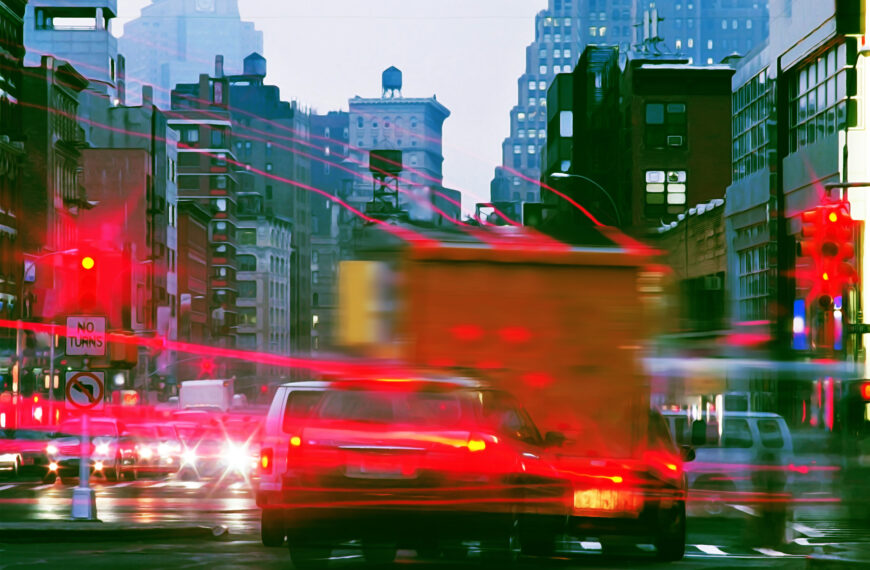
Surprise! A public policy initiative panned by drivers and pro-car pundits turned out to instead be a roaring success that improved traffic congestion, road safety, and even reduced pollution — a godsend not just for those living in Manhattan, but for transit riders, drivers, and outer-borough residents.
Congestion pricing is a policy which charges drivers a toll of up to $9 for using surface-roads below Manhattan’s 60th street, an area known as the Congestion Relief Zone (CRZ), which is enforced by over 1,400 license-plate cameras.
Critics, including president Donald Trump, assailed the program during the runup period, but after a full year of congestion pricing, the New York Times reports massive wins for people living in Manhattan and beyond.
Since the CRZ went into effect on January 5, 2025, the NYT reports an 11 percent decrease in daily vehicle traffic throughout the borough’s central business district. In real terms, that comes out to about 73,000 fewer vehicles per day, or 27 million fewer trips than expected in the program’s first year alone.
As a result, those who do drive or use surface-level transit like buses experience much less traffic. Over the past year, average travel speeds increased 4.5 percent in the congestion zone, while the rest of New York City experienced a 1.4 percent increase. Local bus speeds are also up noticeably, increasing 2.4 percent in the CRZ, and 0.8 percent throughout the rest of the city.
The gains haven’t just been about convenience, either. The reduced volume of cars has led to marked improvements in pollution and traffic safety for motorists, cyclists and pedestrians. It also raised more than half a billion dollars for the city’s beleaguered public transportation system.
“It turns out that mostly when people say ‘New York is noisy’ they really mean ‘cars are noisy,’” Grant Louis of Manhattan told the NYT.
And even the commuters who criticized the program are gaining back untold hours of their life that would have otherwise been spent in traffic. Those who trudge into the city via the Lincoln Tunnel, for example, saw travel speeds increase by an average of almost 25 percent, while average speeds in the Holland tunnel were 51 percent faster compared to pre-congestion data.
Even outside of New York City, people noticed a marked difference in vehicular traffic, confirming earlier studies which found positive run-off effects in surrounding communities.
“I supercommute weekly from Kingston by bus,” resident Rob Bellinger told the paper. “Each week, my bus round trip is 30-60 minutes faster than it was before congestion pricing.”
The implications are clear for other busy metropolitan areas: even gently discouraging unnecessary automotive traffic can have immense benefits for a city’s wellbeing.
More on transit: It’s Starting to Feel a Lot Like Tesla’s Robotaxi Program Is Mostly Smoke and Mirrors
The post The Hard Numbers Show That the Results of NYC Congestion Pricing Have Been Absolutely Incredible appeared first on Futurism.