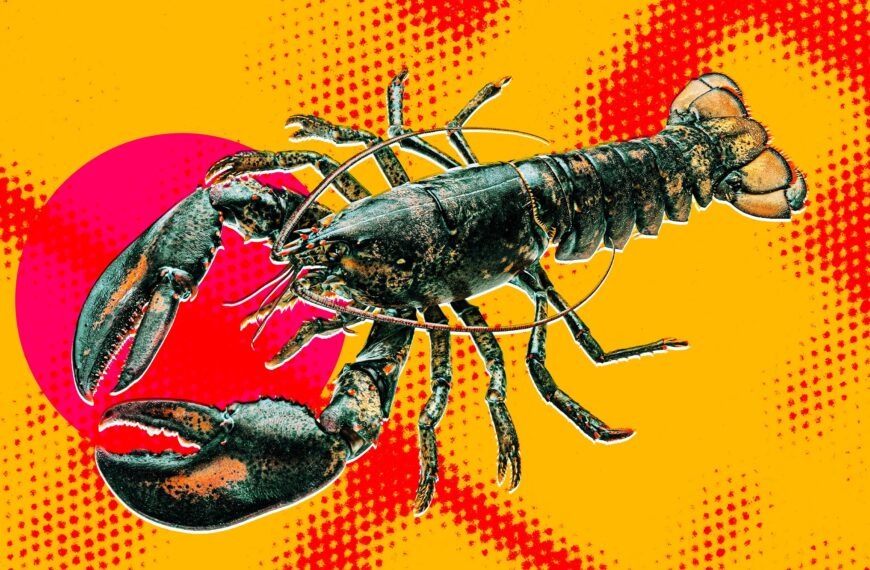
David Foster Wallace once asked readers to “consider the lobster,” in his famous essay about the ethics of boiling the creatures alive.
But new tech brings new horrors, and perhaps Wallace, if he were alive today, would instead be writing about biohacking lobster brains so they can be taken over by an AI agent. Because that’s exactly what a group of young tech founders in San Francisco have attempted to do, according to a riveting side plot in a new feature from The Atlantic about “hacker houses” in the Bay Area. And what happened tells you everything you need to know about the ethics — and actual ability, perhaps — of the people trying to climb their way to the top of this multibillion dollar industry.
Our two would-be Doctor Lobstersteins are 32-year-old Elliot Roth and 19-year-old William Joy. The duo live in one of the many so-called hacker houses that are popping up across the city: college dorm-esque refuges where young tech entrepreneurs bunk together and bounce wild ideas off each other. Theirs is called Biopunk House. It’s home to 20 aspiring tech overlords, and it’s part of a broader network called the Residency, which OpenAI CEO Sam Altman is an adviser on.
The duo’s plan was to use a kit designed for remote-controling a cockroach and implanting it in the lobsters. From there, after demonstrating that they could use to it direct the lobster to do basic stuff like pinch its claws, they’d hook up the now cyborg crustacean to OpenClaw, the wildly popular open source AI agent that has a lobster as its logo. (Yes, this toying with a living being’s biology is also a little joke.)
But wait, aren’t lobster brains and roach brains way different from each other? And wouldn’t this require some serious neurosurgical skills? Don’t worry about it. If the rise of “vibe-coding” has taught us anything about tech bros, it’s that they don’t treat the question of personal ability seriously. If the belief in the technology is there, it’ll all somehow work out.
“I’m pretty sure it’s going to be the first real instance of a complex AI agent interfacing with a biological organism,” Joy rhapsodized to The Atlantic reporter during the planning stages of the experiment.
Don’t get the wrong idea, the pair insisted. Roth and Joy said they were deeply concerned about the lobsters’ welfare, which is why they considered administering them with some kind of anesthetic.
“We are going to give a lot of thought to, ‘How can we ensure that they don’t suffer?’” Joy told the magazine, noting that the animals were “already destined for the dinner table.” (They would eat the lobsters afterwards, they promised, to honor their contributions to bro science.)
Shockingly, their ambitions hit a brutal reality check — for the lobsters mostly, since the humans involved here made out pretty okay. When the reporter checked in on the lobster experiment weeks later, he saw that the tank where the lobsters had been housed “was conspicuously empty of any life or, for that matter, liquid.”
That’s because the lobsters died before the surgery could even happen. The creatures did go under the knife — as part of Joy’s “preliminary” autopsy. The young man said he’d been going through an ethical crisis wondering “whether I should even be doing this.”
And no, the lobsters were not eaten as promised.
What did Roth and Joy hope to gain from biohacking the lobsters? Did they stop for a second and think about if they had anywhere near the level of expertise to pull this off? What were they hoping to prove, other than that it was merely possible? We can’t know what’s going on in their minds anymore than our surgeons manqué can know the nuances of a lobster’s.
But this epitomizes the flippancy that those in AI have towards ethics, and maybe even towards the real world beyond their hermetic hype-doms of tech evangelism. They were toying with these animals’ wellbeing. And when it came time to actually put their nose to the grindstone and attempt a serious feat of neurosurgery, they backed out. The lobsters died anyway out of negligence, with Joy admitting that they might’ve gotten the salinity of the water wrong. These were serious moral questions and basic operational details to iron out, but Roth and Joy seemed to sincerely believed they could vibe their way through it.
This is also the attitude of the AI industry at large. Why are AI chatbots still leading people down destructive delusions and mental health spirals? What will AI companies do to meaningfully clamp down on all the harmful material they’re generating, from misinformation to nonconsensual deepfakes and instructions for hacking? And what about its environmental impact and its monstrous energy demands? The answer to all of these is to press on, to prompt through it, and occasionally feel guilty or worried about it in the way that Anthropic — to give one prime example — constantly acts like it does.
More on AI: AI Zillionaires Are Starting to Get Scared as the Public Turns Against Them
The post Biohackers Attempted Neurosurgery to Control a Lobster’s Nervous System and Give the Controls to OpenClaw, and How It Ended Will Tell You a Lot About the Ethics and Competence of AI Bros These Days appeared first on Futurism.