
Microplastics have infiltrated both our bodies — where they’re found in our organs, bodily fluids, and even brains — and every corner of the Earth, from deep inside sealed caves to the depths of the Mariana Trench.
Now, an alarming new data point: asdoctors urgently investigate the effects of all that foreign material in our bodies, scientists are finding that they’re already wreaking havoc on much smaller organisms.
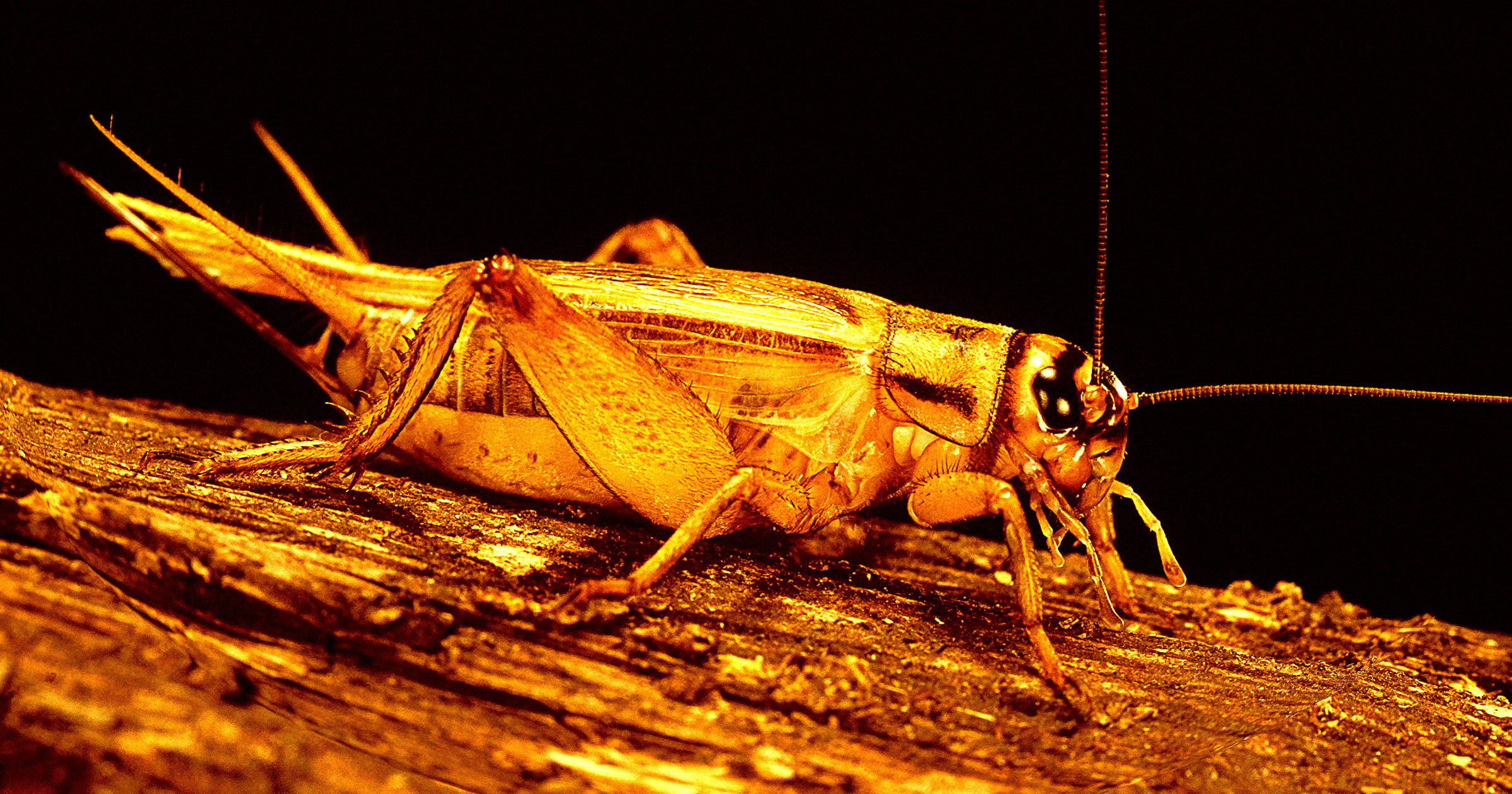
As detailed in a study published in the journal Environmental Science & Technology, scientists from Carleton University in Ottawa and Canada’s National Wildlife Research Center discovered that crickets that were fed microplastics-contaminated food grew in size by a staggering 25 times over a seven-week period.
That’s despite also being given the option of eating natural food instead — which showed that the crickets were initially unable to distinguish between plastic and real food,then became drawn to the plastic-contaminated stuff.
“When given a choice between uncontaminated and plastic-contaminated food, crickets first had no preference for uncontaminated food but then significantly shifted towards the plastic-contaminated food after nine days,” the paper reads.
The larger they grew, the larger their mouths swelled as well. As a result, the crickets became more likely to consume larger plastic particles, as crickets won’t feed on anything that’s larger than their mouths.
“Once a particle was big enough to be eaten, crickets continued to eat it for the rest of their life,” said coauthor and Carleton PhD candidate Marshall Ritche in a statement.
And it only gets worse from there. The researchers found that the crickets broke down the microplastics into nanoplastics during digestion, turning the stuff into an even greater — and harder-to-track — threat to the environment.
Related research has shown that consuming microplastics is also negatively affecting other insects, like marine snails and earthworms.
Even the midge larvae of small flies that are native to Antarctica, some of the most remote regions on Earth, are ingesting the stuff.
“Antarctica still has much lower plastic levels than most of the planet, and that’s good news,” said University of Kentucky entomologist Jack Devlin, who coauthored a study published in the journal Science of the Total Environment, in a recent statement. “But we can now say they are getting into the system, and at high enough levels they start to change the insect’s energy balance.”
Fortunately, “even at the highest plastic concentrations, survival didn’t drop,” he said. “Their basic metabolism didn’t change either. On the surface, they seemed to be doing fine.”
However, the fact that even tiny bugs in Antarctica are tainted with microplastics doesn’t bode well.
“This started because I watched a documentary and thought, ‘Surely Antarctica is one of the last places not dealing with this,’” Devlin recalled. “Then you go there, you work with this incredible little insect that lives where there are no trees, barely any plants, and you still find plastic in its gut.”
“That really brings home how widespread the problem is,” he added.
More on microplastics: Doctors Find Evidence That Microplastics Are Degrading Your Bones
The post Bugs Fed Microplastics Grow to Ludicrous Size appeared first on Futurism.