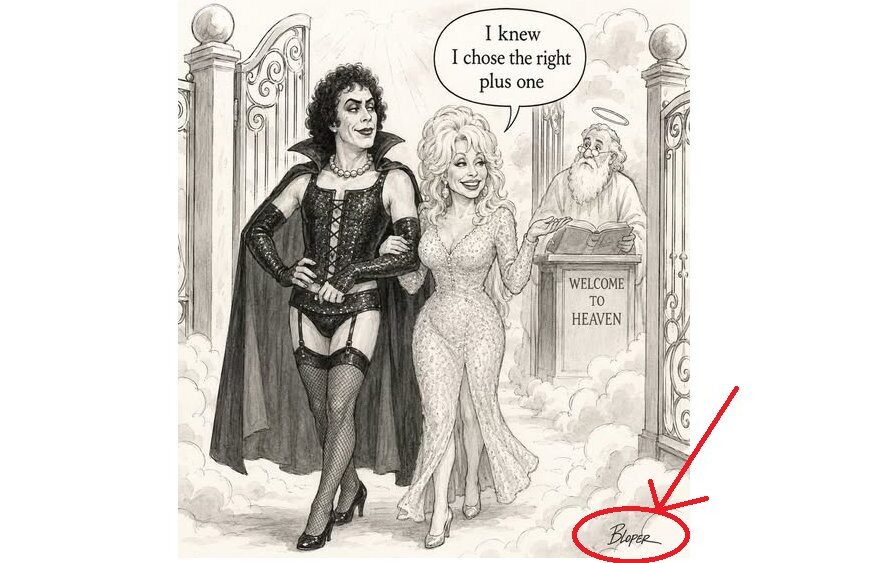
They say imitation is the sincerest form of flattery, but an AI model straight-up impersonating a humble cartoonist is probably not what that adage was going for.
When a kitschy cartoon tribute to the recently deceased Dolly Parton and Tim Curry — dressed as Dr Frank-N-Furter from the 1975 cult classic “The Rocky Horror Picture Show” — going to heaven together went viral, New Yorker cartoonist Brendan Loper started getting messages from friends, family, and fans about whether he made it. After all, there was his unmistakable signature right there in the bottom corner: “BLOPER.”
But he had nothing to do with the cartoon. Some grieving Parton fam had cooked it up in ChatGPT and posted it online, before it blew up.
“It was very surreal,” he told Nieman Lab.
ChatGPT, it turned out, has a predilection for crediting Loper for stuff he didn’t make. In May, someone warned him about another image created by the OpenAI chatbot that had his name on it.
Actually, it really likes impersonating New Yorker cartoonists in general. There are also images with the signatures of the magazine’s longtime comic artists Harry Bliss, Emily Flake, Joe Dator, Pat Byrnes, Peter Vey, and Jason Adam Katzenstein, Nieman Lab found.
Loper was well aware his work was “getting harvested for all of this [AI] training,” but felt his autograph being faked crossed a line. “I’m not a territorial person, but my name is my name. It felt very much like a violation of my personhood.”
These signatures are maybe the most on the nose reminder of how AI models were trained on a vast corpus of writing, images, videos, and artworks that were scraped without permission.
The recreation of their signatures adds another thorny legal dimension on top of the potential copyright infringement involved. In Getty Image’s largely unsuccessful lawsuit against Stability AI, a judge found that Stability’s AI image generator had infringed Getty’s trademark because of the countless examples of the AI producing images that recreated the Getty watermark.
“The signature for me is the certificate of authenticity. I only put it on work that I’m putting on the internet that I feel needs to be recognized as from my hand,” Loper told Nieman Lab. “If I put my name on it, it’s official, it’s mine. It really is a brand. It’s the mark that I made.”
It adds insult to injury. Not only are AI models effectively stealing artwork, but they’re also making a mockery of artists by adding their names to the offputting slop they invariably churn out.
More on AI: Creative Industries Have Been Eviscerated by AI, Data Shows
The post ChatGPT Caught Putting Signatures of Real Cartoonists on AI-Generated Comics appeared first on Futurism.