
Around the world, the demand for cleaner alternatives to petroleum-based jet fuel is rising.
By 2030, the European Union will require a minimum sustainable aviation fuel (SAF) blend of 6 percent, which will rise to 70 percent by 2050. Countries like the United Kingdom, Singapore, Japan, and Brazil are instituting similar policies, putting pressure on players in the global energy trade to ease reliance on crude oil.
SAF can come from all kinds of recycled waste byproducts like plant material, animal fat, and used cooking oil — the latter of which has already become a major source for existing SAF supplies. Unfortunately, the flow of extra spent fry oil is already slowing to a trickle as refiners swoop in to secure the gloop.
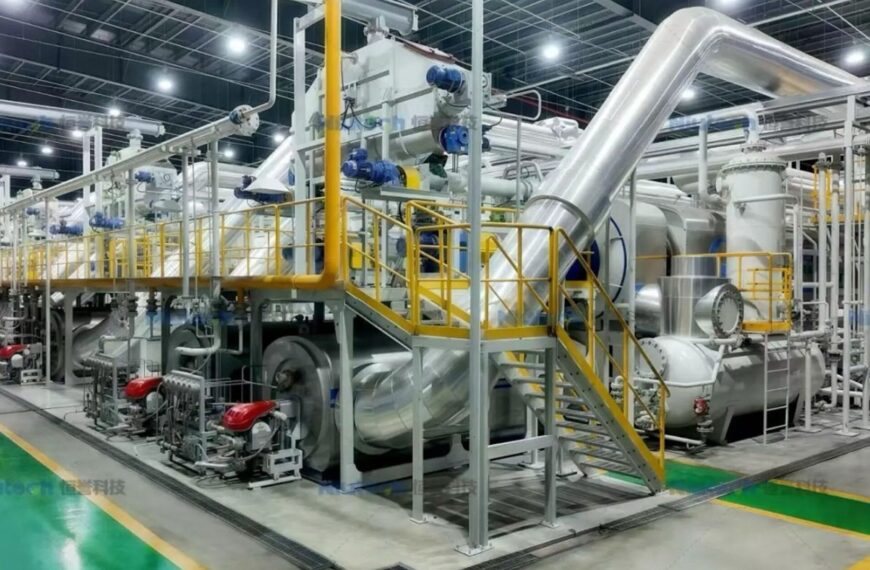
That’s where Chinese company Niutech comes in. In a new press release, first spotted by Interesting Engineering, Niutech announced a massive contract with an anonymous “global energy major” to build out an “industrial continuous waste plastic pyrolysis production line” capable of churning out 10,000 to 50,000 tons of plastic-derived SAF each year.
That might seem like a lot to unpack, but it’s really pretty simple. Basically, the Chinese firm is announcing the development of a massive supply line that turns plastic garbage into usable jet fuel. It plans to do so using a thermal decomposition process called pyrolysis, in which plastic waste is heated to extraordinary temperatures in an oxygen-free environment.
Though it isn’t new, pyrolysis remains something of a niche for the industrial-grade plastics-recycling space. For this approach to meet the growing need for SAF, it first has to graduate beyond the realm of small eco-startups into a widely-accepted industry standard — which appears to be Niutech’s goal.
Unlike previous SAF initiatives involving plastics, this particular production line will all be under one roof, cutting down on the need for costly shipping and handling. The Niutech refinery is also said to make use of a smorgasbord of plastics like polyethylene, nylon, polypropylene, and ABS, all “without complex pre-treatment such as washing, sorting or drying” — streamlining the complex process of sorting plastic and converting it to refinable oil at this kind of scale.
Should Niutech and its anonymous industry partner succeed in bringing the system online, it would undoubtedly serve as a constant source of plastics-based SAF for the global aviation industry, and as a role model for other refineries to follow.
“Large-scale pyrolysis projects impose stringent requirements on continuous operational capability,” a Niutech spokesperson said in the company’s press release. “Niutech has focused on pyrolysis technology for nearly 40 years and brings mature equipment and extensive project experience. This partnership is another validation of the strength of our industrial continuous technology.”
More on China: American Tech Companies Are Suddenly Sweating Bullets as China Catches Up on AI
The post China Installing Huge Facility That Turns Plastic Waste Into Jet Fuel appeared first on Futurism.