
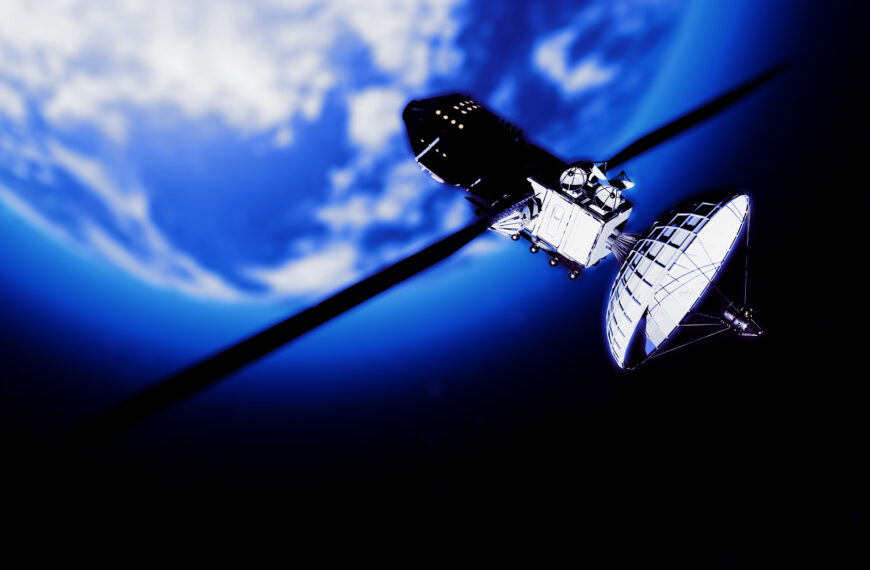
Constant space launches are turning the atmosphere into a “crematorium” for satellites and other space debris.
That was the warning from a trio of astronomers and atmospheric scientists in a new essay for The Conversation, which outlines the grim consequences of populating the Earth’s orbit with tens of thousands of expendable satellites.
Satellites, they write, “have become part of throwaway culture.” Companies like Elon Musk’s SpaceX design their satellites to last no more than a few years, after which they’re supposed to push themselves out of orbit and burn up in the Earth’s atmosphere.
It’s a tidy approach in theory, but one that could in reality be seeding the atmosphere with harmful particulates. The astronomers point to a study that found re-entering satellites were releasing metals into the atmosphere as they burned-up, including copper, lead, and aluminum particles called alumina. The rockets that bring the satellites to orbit are no less guilty, as a recent paper linked the re-entry of the upper stage of a SpaceX Falcon 9 to a plume of toxic lithium. A particularly alarming study speculated that the suffusion of metal particles could kickstart a chain reaction that devastates the ozone layer.
“This is just a fraction of what is to come if planned megaconstellations go ahead — and SpaceX is far from the only player,” the astronomers warn.
Of the some 15,000 active satellites in orbit, SpaceX alone has over 9,000 zipping around the Earth. And last month, the Musk-owned company applied with the US Federal Communications Commission to launch up to one million more to pursue Musk’s dream of building AI data centers in space. Other satellite operators have requested a combined allotment of one million, a report found.
In all likelihood, those figures won’t be accomplished anytime soon, but they do illustrate the sky high ambitions of the space industry. And if SpaceX et al do get their way, it won’t be pretty. The astronomers estimate that a million satellites could mean one billion kilograms of alumina accumulating in the atmosphere. That’s “enough, alongside launch emissions, to significantly alter atmospheric chemistry and heating in dramatic ways we do not yet understand,” they warned.
The junk that accumulates in low Earth orbit could also blowback on the space industry spreading it. Experts warn that collisions between space junk could cascade out of control and cause the entire region to collapse into a destructive vortex of swirling debris. This scenario, called Kessler syndrome, would turn the Earth’s orbit into a dangerous minefield that could set back spaceflight for decades.
In the meantime, falling space junk could become a lethal threat for us on the ground, with increasing reports of large chunks of satellites and spacecraft surviving their fiery plunge instead of disintegrating as intended. The Federal Aviation Administration warned that by 2035, some 28,000 fragments from Starlink satellites alone could survive re-entry each year, raising the chance of someone getting struck and killed by space debris each year to 61 percent.
A surge in satellite constellations, the astronomers warn, would also further obscure observations of deep space. “For scientists, observing the deaths of stars and searching for new planets would become much harder,” they wrote. “Stargazing, astrotourism and cultural astronomy would similarly be disrupted worldwide.”
Global regulation is needed to rein in space launches, they said. This regulatory body or framework, with the help of astronomers, would need to define a “safe atmospheric carrying capacity for satellite launches and re-entries,” while facilitating research to understand the full atmospheric effects of spacecraft.
More on space: Damage to Chinese Spacecraft Was Worse Than Reported
The post Constant Space Launches Turning Earth’s Atmosphere Into a “Crematorium,” Scientists Say appeared first on Futurism.