
Ozempic and other GLP-1 agonist drugs have become an enormously popular way to lose weight. And with generic, much cheaper versions of the medications on the horizon, their use could soon grow even further.
But apart from being a clinically proven way to shed pounds — at least temporarily — along with a whole constellation of other health benefits, the drugs also turn out to be a major strain on the environment.
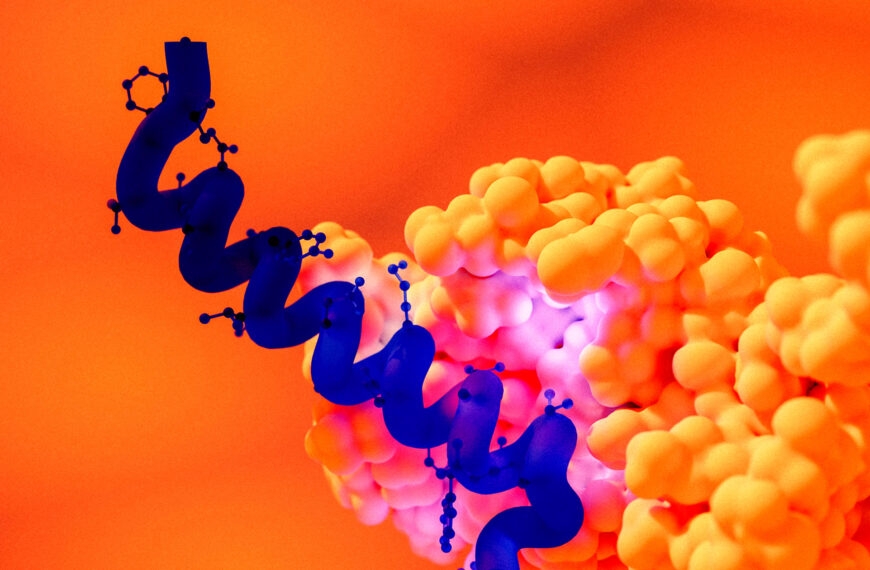
As detailed in a new paper published in the journal Nature Sustainability, researchers from the University of Melbourne investigated how the process of producing peptides — short chains of amino acids that aren’t just used for GLP-1 agonists, but plenty of other drugs and treatments as well — releases huge amounts of organic solvents and other plastic byproducts that don’t break down on their own in nature.
Fortunately, the researchers say they’ve come up with a much more environmentally friendly procedure that could make producing peptide-based treatments far more sustainable in the long-run.
So far, they’ve been manufactured using a technique called “solid phase peptide synthesis,” or SPPS, which anchors the first amino acid building block to a synthetic resin, such as polystyrene beads. Toxic solvents — including dimethylformamide, a component of paint strippers — are then used to add each amino acid one by one, which can then leak into the water supply.
The scale of the issue is considerable. As the lead author of the Nature Sustainability paper and University of Melbourne chemistry professor John Wade wrote in a piece about his research, the annual production of semaglutide, the active ingredient in popular weight loss drugs such as Ozempic, is currently generating upwards of 123 million pounds of toxic solvent waste. And that’s just one of more than 80 peptide-based drugs on the market.
The materials involved are also expensive and difficult to get rid of, thanks to tight environmental regulations.
“Why are we still making life-saving medicines using chemical processes that produce mountains of toxic waste, and could water — the cleanest and most familiar solvent of all — offer a way out?” Wade asked rhetorically.
In response, the researcher and his colleagues came up with a water-based solution to synthesize peptides. By pairing amino acids with specific salts, they found they could overcome limitations associated with SPPS, allowing them to dissolve them in water “at high concentrations while remaining fully functional.”
An activating agent combined with a biodegradable material could allow for “efficient peptide synthesis entirely in water,” the professor argued.
It remains to be seen whether the process can be scaled up industrially, but given the wide proliferation of GLP-1 agonists, it’s critical to investigate ways of making manufacturing processes more sustainable.
“What began as a shared concern among three long-time international collaborators has become an exciting technology with the potential to reshape how some of the most important medicines of our time are made,” Wade wrote. “Cleanly, responsibly and ready for the future.”
More on weight loss drugs: People Who Go Off GLP-1s Are Experiencing a Sudden and Terrible Hunger
The post GLP-1s Are an Environmental Catastrophe appeared first on Futurism.