
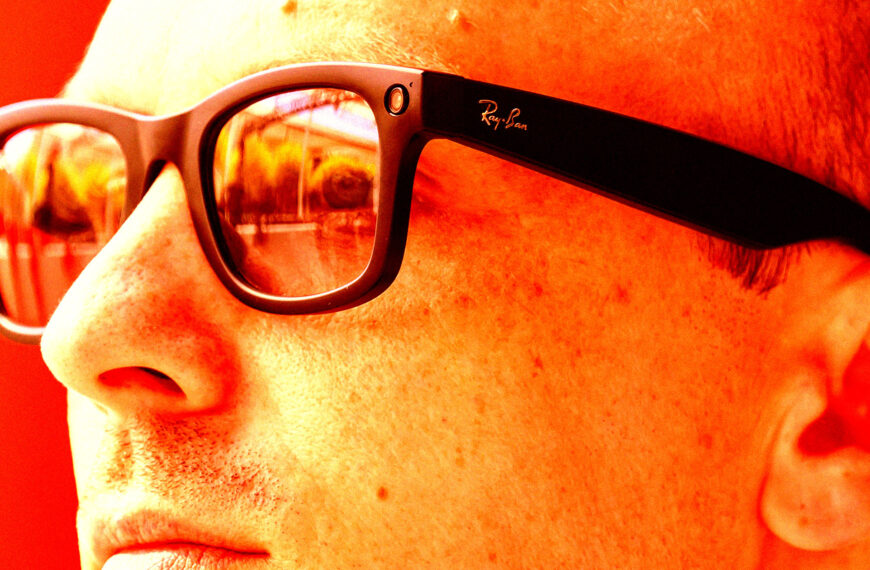
The emergence of smart glasses, which feature largely concealed cameras, microphones and speakers, has turned into a major headache for those presiding over court proceedings.
When Meta CEO Mark Zuckerberg entered a courtroom in Los Angeles last month while wearing one of his company’s smart glasses, for instance, judge Carolyn Kuhl was not impressed, threatening to hold anybody in the room using them in “contempt of the court.”
“This is very serious,” she added at the time.
Another risk: that someone on the stand could receive communication from outside council — or even an AI chatbot — in real time.
It’s a clever scheme, at least until you get caught. As the BBC reports, a UK High Court judge noticed something was seriously off during a January case brought on by Laimonas Jakstys, the co-owner of a Lithuanian company, who was trying to get his firm off an insolvency list.
Judge Raquel Agnello KC instructed Jakstys to remove a pair of smart glasses after noticing that he “seemed to pause quite a bit” before answering during a cross examination.
After he took them off, it became pretty obvious the defendant had been cheating by using them to get real-time advice.
“In my judgment, the smart glasses were clearly connected to his mobile phone during his cross examination because no voice was heard out loud until his smart glasses were removed and disconnected from his glasses,” she wrote in her decision. “There was clearly someone on the mobile phone talking to Jakstys.”
Jakstys was later found to have made multiple phone calls to a mysterious caller listed as “abra kadabra” in his phone, who he claimed to be a “taxi driver.”
The judge wasn’t convinced, saying it didn’t matter who the secretive caller was and concluding that Jakstys was “being assisted or coached.”
“Not only have I held that Jakstys was untruthful in denying his use of the smart glasses and his calls to abra kadabra,” she concluded, “but the effect of this is that his evidence is unreliable and untruthful.”
Without wearing his glasses, the defendant appeared to be for a loss of words — and not because of a language barrier, as a Lithuanian interpreter was standing by, ready to translate.
“Once Mr Jakstys was no longer had his smart glasses, he hesitated quite a bit before providing answers to questions,” the judge’s write-up reads. “Frequently, he was asked a question and he would pause for some time before asking for the question to be repeated or he would say he did not understand the question. This occurred frequently when it was clear to me he simply did not know what his reply should be.”
“In conclusion, I reject Mr Jakstys evidence in its entirety,” she concluded. “He was untruthful in relation to his use about the smart glasses and in being coached through the smart glasses. He had a blatant disregard for the signing of the disclosure certificate and carrying out his disclosure obligations.”
Given the wide proliferation of smart glasses, like Meta’s Ray-Ban eyewear, it’s unlikely to be the last time we’ll hear about incidents like these.
While Jakstys ended up getting caught, it’s unclear whether other judges will also have the wherewithal to spot the offending tech in the court room.
More on smart glasses: Meta Workers Say They’re Seeing Disturbing Things Through Users’ Smart Glasses
The post Man Caught Using Smart Glasses to Get Advice While Being Cross-Examined in Court appeared first on Futurism.