
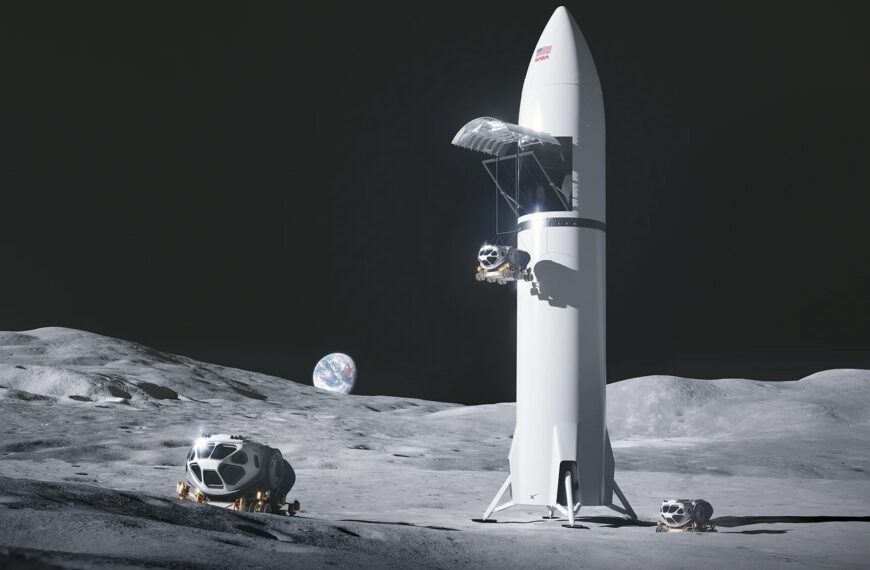
To get SpaceX’s mammoth Starship all the way to the Moon and back with astronauts on board will require an enormous amount of fuel.
Over a period of eight days, Elon Musk’s space company will need to launch at least 15 of them to fully load a fuel depot in low-Earth orbit. That fuel will then have to be transferred into a separately-launched Human Landing System variant of the spacecraft that astronauts will board before descending to the lunar surface.
Needless to say, SpaceX certainly has its work cut out to have its Starship ready for NASA’s Artemis 4 mission in 2028, the first crewed attempt to land on the Moon since 1972 — let alone dramatically increasing its launch cadence, as it has yet to launch and safely land the rocket.
It gets worse. Now, the space agency’s watchdog says there’s an even bigger problem that could threaten NASA’s ambitious plans. According to a new report by the Office of the Inspector General (OIG), “NASA’s launch infrastructure is dated and lacks the capacity to meet the growing demands of the Agency and government and commercial partners.”
A major surge in commercial launches has put the launch pads at NASA’s Kennedy Space Center in Florida and Wallops Flight Facility in Virginia under major strain. And simply building more pads is far easier said than done. Growing “demand for super heavy-lift launch vehicles” is “driving the need for additional launch pads that can accommodate these vehicles, but locations for new launch pads are limited and will require extensive time and resources to develop,” the OIG frets.
Meanwhile, electrical power distribution is “being used beyond its design life and needs to be upgraded,” while the infrastructure for fuel components, like nitrogen and helium, could also “lead to delays.” Even the roadways around Kennedy were “not designed to accommodate the volume, frequency, and weight of modern heavy transport operations.” And declining budgets for maintenance and construction have resulted in lagging infrastructure that exacerbate it all.
The news comes after the Federal Aviation Administration approved SpaceX to launch its Starship from launch complex 39A, from which many Apollo and Space Shuttle program missions launched starting in the 1960s. Musk’s company is hoping to greatly expand the complex for its enormous spacecraft, including the addition of the many necessary structures on top of the launch pad, like towers and fuel tanks.
Meanwhile, Jeff Bezos’ Blue Origin, which NASA has also selected to develop a competing Human Landing Systems spacecraft for the Moon landing, will also need plenty of space and capacity for launching its powerful New Glenn rocket, further complicating matters.
In short, as the OIG notes in its report, NASA and its commercial partners need to make some major changes to ensure that the Artemis Moon program remains on track.
And that certainly doesn’t bode well, considering the development of both New Glenn and Starship are already running into numerous delays and failed test launches.
More on Artemis: NASA’s Next Moon Mission Is a Rube Goldberg Machine of Corporate Failure Points
The post NASA Has a Major Problem Threatening Its Entire Moon Plans appeared first on Futurism.