NASA’s Swift observatory, designed to study the most powerful explosions in the universe, launched into orbit over two decades ago.
Since then, it has provided scientists with a constant stream of invaluable multi-wavelength observations of gamma-ray bursts, which are extremely energetic events that rock our and distant galaxies, providing groundbreaking insights into the earliest days of the universe billions of years ago.
But the observatory is really starting to show its age. The most pressing issue is that thanks to intense solar activity, its orbit has been decaying, pushing it ever close to reentering the atmosphere and burning up.
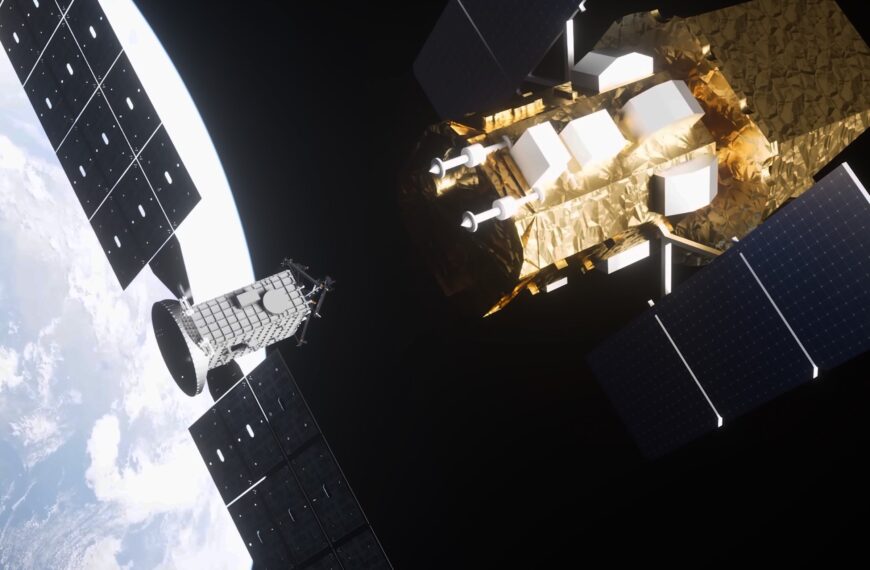
Now, as part of an unprecedented and risky rescue mission, NASA is launching an autonomous robotic spacecraft, dubbed “Link” and developed by contractor Katalyst Space Technologies, to give it a boost and prolong its life, the Associated Press reports.
While China successfully used its Shijian-21 robotic spacecraft to push a satellite into a higher graveyard orbit in 2022, the Swift rescue mission is a major step up in complexity. For one, the observatory wasn’t designed with this kind of rescue mission in mind.
“This is the first American space robot to go up and do anything like this,” Katalyst Space CEO Ghonhee Lee told the AP.
The startup is also looking to give NASA’s Hubble Space Telescope a much-needed boost.
“NASA has all these big senior observatories… all of them can benefit from a service like this,” Lee added. “So what we’re proving with this mission is this is a new play in the playbook that’s available.”
The current head of NASA, Jared Isaacman, proposed a similar mission to rescue the Hubble back before he was appointed to head the space agency — but NASA’s researchers ultimately passed on the plan.
The mini-fridge-sized Link spacecraft is set to launch later this week. Once in orbit, it will spend about a month chasing down the Swift observatory, then give it a boost from an orbit of 224 miles all the way up to 373 miles over the subsequent months.
The spacecraft is outfitted with two gripper-like arms that will grapple the 1.6-ton observatory before firing its thrusters.
Katalyst Space Technologies can’t guarantee the rescue mission will pan out as planned. But given the enormous scientific value Swift has provided — not to mention the enormous cost to replace it wholesale — it’s worth a shot.
“If we let Swift reenter, we would lose that telescope,” NASA’s science mission chief Nicky Fox told the AP. “We would lose a lot of capability.”
“We don’t currently have the budget to build another one to replace that,” she added.
More on gamma ray bursts: Astronomers Say Star Self-Destructed So Catastrophically That It Left Behind No Trace of Its Existence
The post NASA Prepping to Launch Extremely Risky Rescue Mission appeared first on Futurism.