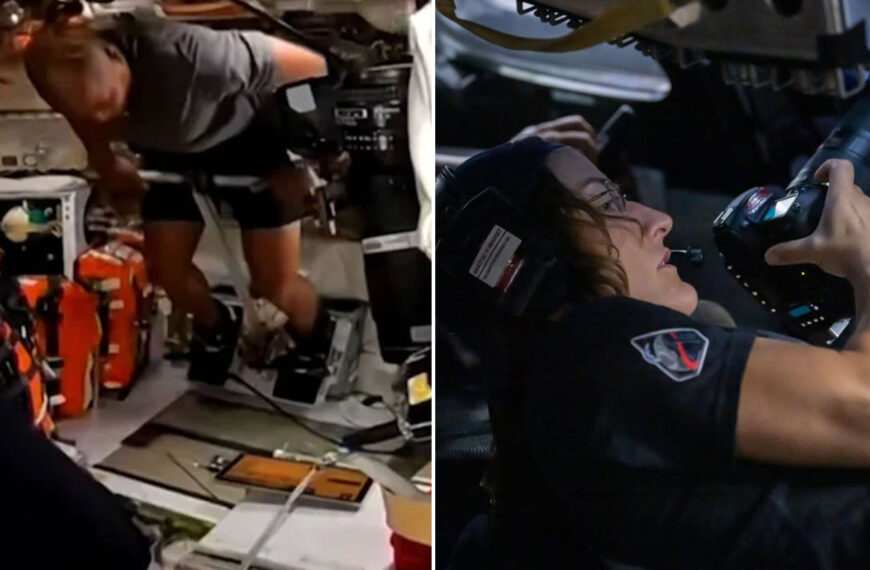
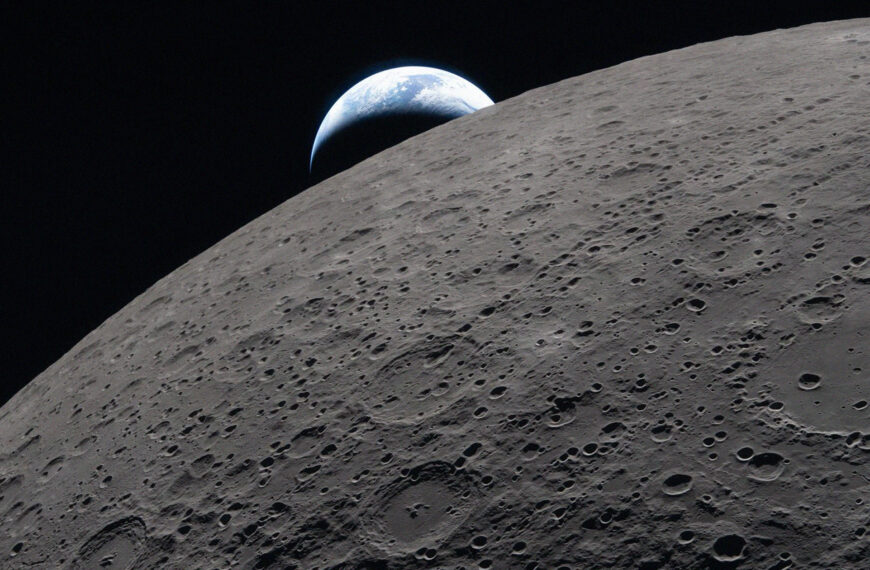
As NASA’s Artemis 2 crew careened around the far side of the Moon earlier this week — breaking the record for how far humans have ever traveled from Earth in the process — they were treated to an incredible view.
As they cruised past the Moon’s heavily-crated far side, the astronauts watched in amazement as micrometeorites impacted the lunar surface, catching both them and mission control off guard. The mission’s crew said they witnessed at least six impacts on the lunar far side during the almost-one-hour-long total solar eclipse as the Sun went out of view behind the Earth from their perspective.
There were “audible screams of delight” at Mission Control in Houston, as mission science lead Kelsey Young recalled during a Tuesday press conference.
“There was a little giddiness,” NASA astronaut and commander Reid Wiseman told Houston during the observation period. “We have seen three impact flashes so far. I saw two, and [mission specialist Jeremy Hansen] has seen one.”
“Undoubtedly quick impact flashes,” he said, adding that “it was not Sun glint off a particulate from the thrusters or the burns tanks.”
“And Jeremy just saw another one,” Wiseman added.
The face on Young said it all. The livestream showed her jaw hitting the floor as she looked around the room at Mission Control in disbelief.
“I don’t know if I expected to have the crew see any on this mission, so you probably saw the surprise and shock on my face,” she later recalled.
While the team said that they already got what they came for — astonishing close-up views of the lunar surface and its unusual geographical features — the constant bombardment of tiny meteorites was unexpected.
“This is absolutely everything we hoped for by integrating science into flight operations,” Young told reporters. “Science enables exploration, and exploration enables science.”
“They were really high-priority science for us, so the fact that they saw four or five was just outstanding,” Canadian backup astronaut Jenni Gibbons told Agence France-Presse.
Micrometeorites are already a major point of discussion as the United States continues to push for the establishment of a permanent settlement on the Moon. Besides “moonquakes” and massive amounts of space radiation, future astronauts will need to have sufficient shelter to protect them from these errant space rocks.
Without a protective atmosphere like the Earth’s, which acts as a shield and causes most meteorites to burn up, the Moon is largely exposed, as evidenced in its crater-riddled appearance.
Even if the fragments are extremely small, they can still impact the surface with a huge amount of force while traveling tens of miles per second. In other words, future lunar habitats will quite literally be bulletproof.
In a 2025 study, scientists used NASA’s Meteoroid Engineering Model to calculate impact rates for a hypothetical lunar base the size of the International Space Station. They found that between 15,000 and 23,000 particles, ranging from a millionth of a gram to ten grams, could strike such a habitat per year. (It’s unclear whether the latest first-hand observations could influence their findings.)
However, the researchers identified some areas — including the lunar south pole, which NASA is eyeing for its first Artemis base — as being less battered.
Another possibility is to seek shelter inside deeper craters or caves left behind by lava tubes to shield both from meteorites and space radiation, an idea we’ve only begun to explore.
More on the mission: We’re In Utter Disbelief About the Photos the Moon Astronauts Just Sent Back
The post NASA Scientists Screamed With Delight When They Saw Something Smashing Into the Moon appeared first on Futurism.