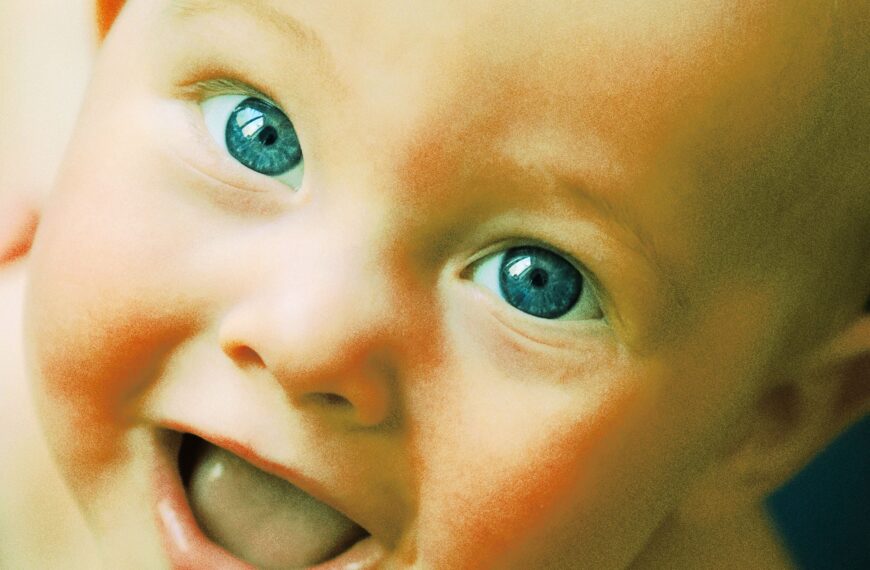
Who needs palm readings? New research suggests that scanning a preterm baby’s eyeballs can predict how its brain will develop.
The resulting study, published in the journal JAMA Ophthalmology, found that specific features in the retinas of infants who were born premature are linked to cognitive motor, and behavioral outcomes at the age of two.
Promisingly, a noninvasive eye scan is all that’s needed to identify the tiny telltales, the researchers say. This bedside exam could let doctors quickly identify kids who are vulnerable to developmental challenges, which very preterm infants are at a 50 percent higher risk of experiencing. Kudos to what sounds like the least dystopian application of eyeball-scanning around.
“Because the retina is part of the central nervous system, it gives us a unique, noninvasive way to study the developing brain,” coauthor Cynthia Toth, a professor of ophthalmology at Duke University, said in a statement about the work. “Using a quick, safe eye scan, we may be able to identify infants at higher risk for developmental delays much earlier.”
A very preterm infant is born before 32 weeks gestation, or about eight weeks early.
In the study, the researchers followed a group of 72 very preterm infants until they were two years old. While they were still newborns, the researchers took images of their retinas with optical coherence tomography, a technique that uses infrared light to safely probe the eyes. They focused on a feature called the retinal nerve fiber layer (RNFL), which connects with the optic nerve, the eye’s link to the brain.
Then, when the children were two years old, the researchers assessed them for motor, cognitive, and behavior development.
The followups revealed a clear pattern. The kids who had a thicker RNFL when they were born had better development outcomes at age two across all areas, with higher motor scores, cognitive scores, and a lower autism risk based on a common screening test for toddlers.
If the findings are borne out by further research, the authors are optimistic that it could let parents get their kids the help they need.
“This research moves us closer to identifying which children may need extra support much earlier in life,” lead author Kathryn E. Gustafson, a Duke psychiatry professor, said in the statement about the work.
“Our goal is to give every child the best possible start,” Toth added. “If we can use a quick eye scan to better understand brain development, that’s a powerful step forward.”
The post Scanning Your Baby’s Eyeballs Will Tell You How Their Brain Will Turn Out, Research Suggests appeared first on Futurism.