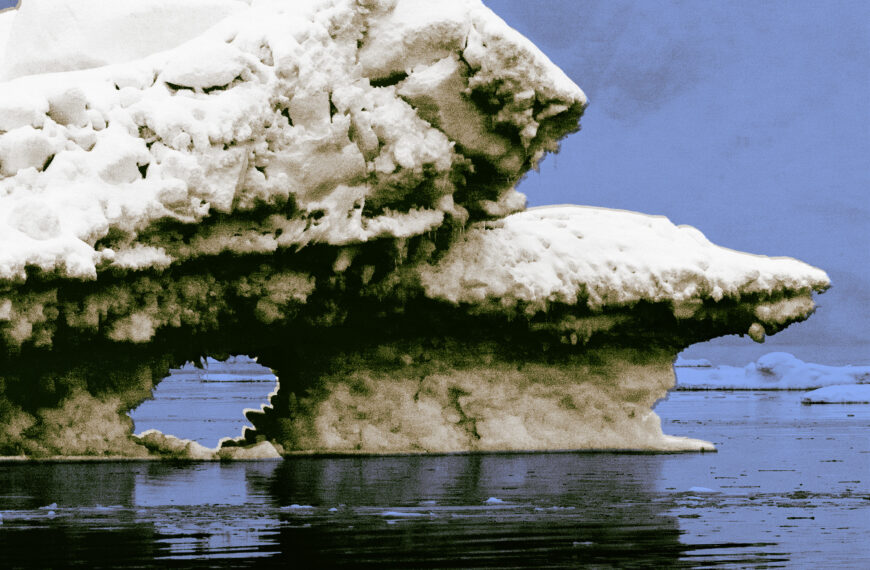
Braving poor visibility, high winds, and frigid temperatures, a team of researchers has finally established a foothold on Antarctica’s fastest melting glacier.
According to the New York Times — which embedded with the polar expedition — 10 drilling personnel and roughly 17 tons of gear have been safely deposited on top of the Thwaites Glacier on Monday. Their goal is to plant scientific instruments into the rapidly-melting berg over the next few days, in order to observe, and hopefully better understand, its faster-than-expected disintegration.
During a rare break in the weather, the NYT says helicopters airlifted the researchers and their equipment 19 miles to their planned outpost site on top of the glacier. The two helicopters involved flew a dozen total loads of cargo from the icebreaker ship to the camp site, while glacial scientists and engineers erected a small tent city, complete with bathrooms, generators, and a mess hall.
The stakes are high. At worst, experts fear that the destruction of the Thwaites — evocatively known among scientists as the “Doomsday Glacier” — could have catastrophic effects on sea levels and coast lines around the world.
The camp is rudimentary: the bathrooms are described as simple outhouses drilled into the snow, while the dining tent boasts a basic air fryer and bread machine. Most food consists of “low-effort meals,” the NYT explains, like freeze-dried fajita bowls and premade soup that can be warmed up. Still, the team also has a cooler full of frozen meat and veggies, which had to be buried within the snow.
Because the ship that carried the team to Thwaites needs to embark on another trek in just a few weeks, the drilling team will need to vacate the glacier by February 7. Before they do, they hope to deposit monitoring equipment into the ocean water half a mile below their feet.
If they’re successful, scientists will be able to remotely collect temperature data on the ocean waters thought to be contributing to the thinning ice shelf. That data is important for glaciologists, who’ve watched in horror as the Thwaites melted at a rate of two or three times faster than expected over recent years.
“We’re very lucky to be here; we also work very hard to be here,” Scott Polfrey, a mechanical engineer at the British Antarctic Survey told the NYT. “It’s important for everybody here that we do things safely and we come home with hopefully some hard-hitting scientific results that speak about our planet.”
More on glaciers: Scientists Uncover Secret Landscape Hiding Miles Below Antarctica’s Ice
The post Scientists Scramble to Set Up Outpost on Rapidly Melting Glacier appeared first on Futurism.