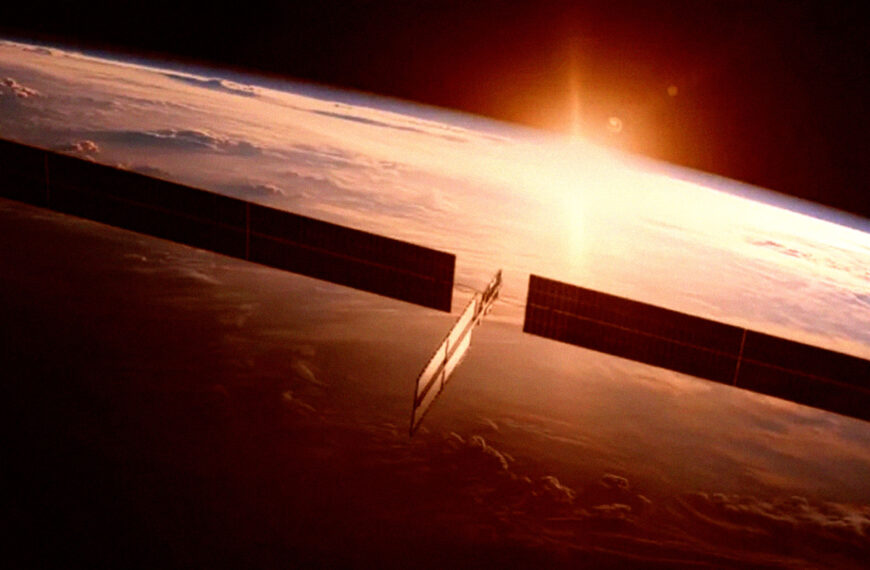
SpaceX CEO Elon Musk has been adamant that putting enormous AI data centers in Earth’s orbit is a “no-brainer.”
At the World Economic Forum in Davos earlier this year, Musk claimed that the unconstrained solar power beyond our planet’s surface makes it the “lowest-cost place to put AI,” something “that will be true within two years, three at the latest.”
Yet many experts remain unconvinced that sending up to a million satellites, each bigger than the International Space Station, makes any sense, citing concerns over economic feasibility and physical limits. Some warn they could even cause an environmental catastrophe, with aging and failing hardware doomed to burn up in the Earth’s atmosphere while releasing copious amounts of ozone-depleting chemicals.
Even SpaceX itself isn’t fully sold on the idea its mercurial CEO is pushing hard — and prioritizing over his decades-old wish of sending humans to Mars.
In excerpts of the company’s pre-IPO filing obtained by Reuters, the company admitted that its “initiatives to develop orbital AI compute and in-orbit, lunar, and interplanetary industrialization are in early stages, involve significant technical complexity and unproven technologies, and may not achieve commercial viability.”
It’s a significant tonal shift ahead of the company’s blockbuster IPO, which is reportedly on track for later this year, at a record-breaking valuation of roughly $1.75 trillion.
SpaceX acknowledged that sending sensitive AI chips into space may cause them to wear out much faster. Orbital data centers will operate “in the harsh and unpredictable environment of space, exposing them to a wide and unique range of space-related risks that could cause them to malfunction or fail.”
The company also pointed out its heavy reliance on its super heavy launch platform, Starship, to build out its enormous constellation of up to one million data centers.
“Any failure or delay in the development of Starship at scale or in achieving the required launch cadence, reusability and capabilities thereof would delay or limit our ability to execute our growth strategy,” the filing reads, as quoted by Reuters.
SpaceX has yet to successfully send the rocket into space and safely land it in one piece. Previous test flights have resulted in massive mid-flight explosions.
However, thanks to its enormous size and payload capacity, SpaceX could soon dramatically increase the amount of hardware it can launch into space, while theoretically lowering costs as well.
In short, its plans for orbital data centers aren’t just extremely ambitious; Musk has framed his entire space company on the endeavor months ahead of its long-awaited IPO. Yet glaring questions regarding the idea’s financial, let alone physical, feasibility remain unanswered — a reality that the company’s engineers are clearly having trouble ignoring.
More on SpaceX IPO: SpaceX Files for IPO
The post SpaceX Admits AI Data Centers in Space May Be a Really Terrible Idea appeared first on Futurism.