Anybody who’s regularly driven in winter conditions knows the importance of keeping windshield washer fluid topped up. Keeping the salty grime stuck to your windshield and rear window to a minimum is crucial for visibility, especially in inclement weather.
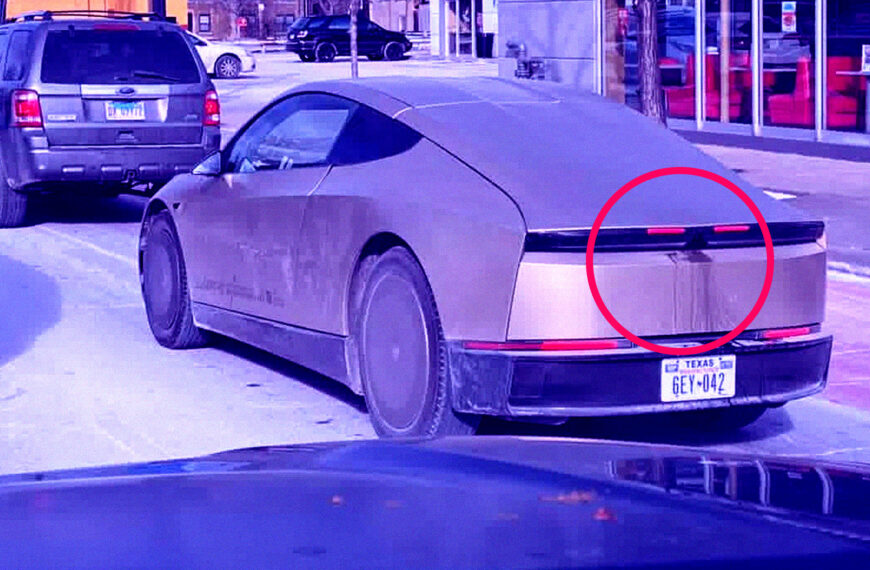
In the case of an autonomously operating vehicle, ensuring visibility for the vehicle’s sensors could similarly be a matter of life and death. That’s particularly true for Tesla’s Cybercab ride-hailing vehicles, which rely entirely on camera feeds. Recent sightings of an early prototype in Chicago — a city known for its harsh and long winters — suggest the EV maker is taking the matter seriously, opting to install a rear-facing camera washer to keep obstructions to a minimum.
Images of the salt-covered prototype show liquid — presumably windshield washing liquid or antifreeze — dripping down its rear bumper, almost as if it had a runny nose.
The design change suggests the Elon Musk-led company is taking active measures to ensure its Cybercabs can operate in actual winter outside of its home states of California and Texas.
Tesla is hoping to expand its autonomous Robotaxi system in cities across the country. In November, the company announced that Las Vegas, Phoenix, Dallas, Houston, and Miami are next. Why the cab was spotted in Chicago remains unclear.
However, others lamented the fact that the company’s EV lineup, which has since been seemingly relegated to the bottom of the company’s priority list, had yet to benefit from a similar washer system, despite being on sale for many years now. Rear camera washer systems are a common feature among many production vehicles from other carmakers.
“This is a feature that many Tesla owners have been asking for, especially in snowy areas,” tweeted automotive journalist Sawyer Merritt. “Hope it makes it to the rest of the lineup.”
Tesla first showed off its Cybercab during a flashy event in October 2024. The odd design sparked a heated discussion, with critics pointing out its diminutive size — it can only fit two passengers — as well as a possibly unrealistic target price, and plenty of far-reaching promises about wireless charging.
At the time, Musk promised that the vehicle would enter production in 2027. Then, during the company’s Q3 earnings call last year, he promised that volume production would instead be reached in 2026.
“At this point, I feel 100 percent confident that we can sell unsupervised full self-driving at a safety level much greater than human,” he told investors.
But given the state of the company’s EV software, which is still leading to plenty of collisions and near-misses even when the weather is playing along, the company has its work cut out to realize Musk’s ever-ambitious vision.
That’s particularly true when it comes to rolling out an autonomous ride-hailing service in places that experience extreme weather, from frozen-over roadways to a barrage of salt that can clog up vehicle sensors in a heartbeat.
Let’s hope Tesla is aware that keeping the antifreeze topped up will be far more mission-critical than one might think.
More on the Cybercab: Tesla Loses Trademark to “Cybercab” Due to Its Own Staggering Incompetence
The post Tesla Cybercab Spotted Dripping Liquid appeared first on Futurism.